Introduction

The Beginning
I was a child for a very long time, in fact for as long as I can remember. I lived with my toys from morning till night. My sister and I, we made our own world of toys in our dedicated room upstairs, or outside on the terrace when the weather was warm. We weren’t aware of anything serious in life. Life was play. Neither did I listen to any so-called “serious” music as a little girl. I listened to ABBA and I adored them! They were always fun to have around, they were joyous and free, they looked sweet – even the boys. The voices of the girls were the most beautiful thing I ever heard, they were the sound of my world as a child. Together with the neighbourhood girls we sang and danced, enacted little choreographies for our parents to enjoy. We were happy and free.
I didn’t like going to school all that much. I wasn’t keen on learning all the facts or acquiring knowledge or skills. What I wanted most of all was letting my mind roam freely, letting it wander where it pleased to do so. School didn’t make me happy: it felt like a straitjacket for my mind and I did not like that. It wasn’t until I started attending classes at the University of Louvain that I began to get really interested in some things that didn’t involve play. I studied linguistics and philosophy of language and became fascinated with the possibilities of language and thinking in words. I noticed that I felt at my best when my mind was able to go in any direction it wanted, without being restricted or forced into anything it didn’t want to focus on. In my philosophy classes that soon followed I discovered for the first time what I really was interested in: I loved to hear about all those philosophers who had constructed all sorts of theories about the world, who analysed “world” and “life”, the totality of it all, with no boundaries whatsoever. It felt like an experience of expansion. I was open to anything: from the pre-socratics to postmodern philosophy. It was a fascinating world and it was where I wanted to be. This resembled my play world of toys where my imagination used to run freely.
I also realised that music could be like a perfect soundtrack to go on a discovery tour of “world” and “life”, more than literature – which I had experienced at times as too much of a world belonging to others, too far removed from my own and my imagination got stuck in these lives of other people who remained just strangers after all. Most of it was literature written by men and I had a hard time empathising with their world, a problem I had never encountered while studying philosophy, of course also a former male bastion. Anyway, to me music became the closest thing – next to philosophy – to explaining “world” and “life”, music guided not only my feelings, but also my moods and my thoughts. For me there was never any doubt in my mind that music held meaning – “of the literary kind” as a character in the movie adaptation of E.M. Forster’s (one of a handful of male writers I really liked) novel “Howards End” says. Music and the way our consciousness relates to what we live through every day, are somehow closely connected.
Music and Meaning became like an obsession. I hung on anyone’s lips who had anything worthwhile to say about music that was a little different from the usual clichés, I even secretly admitted to myself that perhaps I liked to listen to “talk about music” better than to music itself, which of course is not really true. But the two go hand in hand for me. I love thinking about music in words.
“Let it Be a Joke“
Now, after all these years, one ABBA song became increasingly meaningful to me. It’s the opening song of the B-side of their last album – not counting their 2021 album “Voyage” – “The Visitors”, called “I Let The Music Speak”. Perhaps the song title sounds a little cheesy and cliché, but the words in it – in all their straightforwardness – just seem to sum up my infatuation with music in a simple but clear language.
“I’m hearing images
I’m seeing songs
no poet has ever painted
voices call out to me
straight to my heart
so strange
yet we’re so
well acquainted
I let the music speak
with no restraints
I let my feelings
take over
carry my soul away
into the world
where beauty meets
the darkness of the day”
The following line is perhaps most speaking of all:
“Where my mind is
like an open window”
That is exactly what I needed from music and it gave it to me in abundance, time and time again. Music just suits my mind. It makes me think about “world” and “life”.
One day skimming through some of the lyrics sheets that came with the albums, I saw my name written in one of the songs: “Joke”. Not understanding the English language of my idols, I was really excited seeing my name mentioned in a favourite song. So, very proudly, I showed it to my dad who was sitting at the living room table – probably finishing his supper – : “Look, vake, it says my name!.” And he responded somewhat disinterested that “it was just a joke”. Well, of course he replied in Dutch to me – “ Dat is een grap” -, he said and I got really confused. I didn’t understand what he meant by that, I had no idea he was just translating the word to me… Somewhat disappointed and puzzled by his remark, I was kept in the dark for quite a while about the mystery of my name showing up on those lyrics sheets. It was just another mystery added to the spell that music already had cast on me in my tender childhood days.
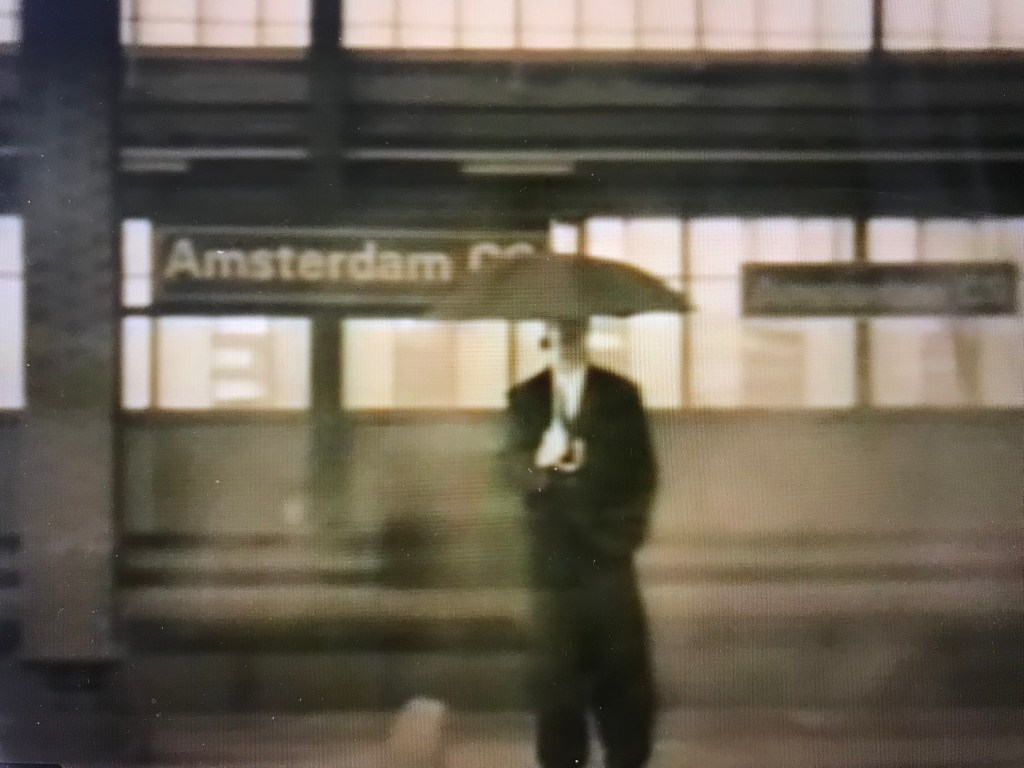
“Behind Monet and Debussy the Umbrella Persisted”
(E.M. Forster, Howards End)
Perhaps music was meant to take us away from the mundane, the banalities of everyday life and our terrestrial worries. I’ve heard it said that music transcends our little world. But for me it has been quite the opposite. I always took music to be very personal. I don’t really want to get away from it all. Music grounds me and I feel it empathises with all my struggles, questions and doubts. Just like Helen Schlegel in Howards End, I had felt “the reliable walls of youth collapse”, but there was still music to turn to…
This sweet, passionate character of Helen Schlegel in Forster’s novel, she kept on labeling the music she had heard “with meanings from start to finish”, turning it into literature or pictures. She heard her own trouble replicated in music and it could deeply move her and even upset her. It has happened to me, that I could not sit through an entire performance, because I was somehow disconcerted by the music being played. I like it when music takes our worldly concerns and situation “seriously”; after all we are creatures whose loss of their umbrella can distract them from enjoying a “heavenly” piece of music by Beethoven or Debussy. We are never sure where we belong – as is indeed the case of music – to the material world of the piano and its wood, metal and felt or to the ethereal, intangible world of flight that the music takes in its escape from the instrument. And that’s ok.

Joke Roelandt, October 2023
2 responses to “Introduction”
-
Well conceived and stated Joke. I shall look forward to following your quite intelligent observations. Of course I have been familiar with your writing talents for several years, but it’s now time for you to reach a wider and more diverse audience.
Tom Coleman
LikeLike
-
Joke Roelandt is a very talented writer who deserves more readers and more exposure. She wonderfully combines deep insights into the soul of music with philosophical reflections, literary associations and personal feelings. Her stories about the works of Dutch band Nits are truly remarkable. She has also written an amazing piece on my album ‘The Playful Maziness of Art’ in which poems by Edgar Allan Poe were set to music. I sincerely would recommend reading all the stories on this website.
Harke Jan van der Meulen
March 2024
LikeLike

 Larissa on the Windowsill
Leave a reply to Harke Jan Vd Meulen Cancel reply