Tin Ting
There are lots of music genres. Some of them, more than others, lend themselves to reflecting on the nature of music itself. Pop music is not one of those. Although I don’t consider the genre as “thoughtless” – I have been a devotee of pop ever since I was a young girl -, it mostly offers loose reflections on the state of society, and most of all on the state of mind and the emotional state of the lyricist. The pop vibe and its charming, seductive rhythms and enrapturing tunes have its own merits for sure. And then – ting ting – today, the sound of the doorbell announced the arrival of the second cutest thing in my Nits collection: the mini-disc of the album “Ting”. Behind the formal austerity of the grey packaging with four letters hides a little philosophy of music, both enchanting and fundamental.
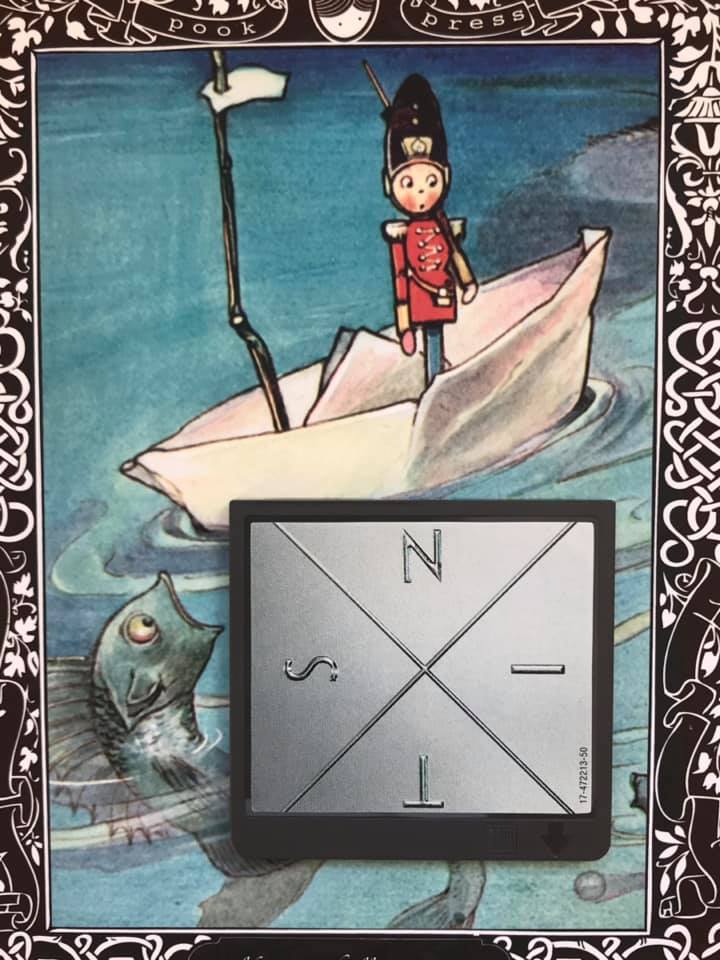
Its outer appearance makes me think of the story of “ The Steadfast Tin Soldier”. Do you remember this fairytale written by Hans Christian Andersen? It revolves around the adventures of a little toy soldier with only one leg who falls in love with a paper ballerina who lives in the same house. But their love is – as is so often the case – of the impossible kind . After some tribulations which mostly involve natural elements – wind, water and fire – their love somehow materialises through a magical sort of alchemy. The materials of which both “Ting” and “The Steadfast Tin Soldier” are made, are indeed very similar. Apart from a cello and bass guitar, the sounds of “Ting” are mostly percussive: piano and lots of other percussive instruments and tools. “Ting” is like a play of touch, of (music) materials taken on a trip alongside water, wind, earth and fire. A sound of matter which gives rise to a sculptural music.
Already right from the opening of the album, the first notes of the piano on “Cars & Cars” seem to evoke the delicate hammering sounds of a sculptor at work, leading on to an expectant little intermezzo of suspense. The suspense of the creation of something out of the ordinary, something fabulous. No other pop band approaches music so tactilely, composes so closely to the material world, so closely to nature’s elements. The wonderfully warm percussion creates an intensely haptic sense of being part of the world of matter and its elements. The lyrical lines of the songs depict images and landscapes that are like little paintings encased in neat percussive frames, – in wood, bronze and copper boxes of forms -, dancing in the hollow spaces of the music sculptures whose silences are filled with words referring to concrete things and experiences, to the passing of time from which only nature seems to escape, or from which only nature offers a seemingly eternal refuge. I like the fluidity of the vocals in one of the many highlights of “Ting”, “House on the Hill”, how they seem to float between rocks of percussion, just like the tin soldier is floating in his little makeshift boat on the water, it tells of the fate of a music sequence, its waves that evoke its unpredictability, the volatility and capriciousness of a music line against the steadiness of the material of the music instrument. A combination that makes for one of the most beautiful alchemies in our world, the one which transforms music matter into emotion, into movements of the soul. I think that is precisely the essence of music, this very unlikely, dreamlike transformation here so enchantingly forged by our Ting soldiers. It’s the eternal tale of the creation and shaping of (musical) stories, how chance meets necessity, how after all the contingencies and synchronicities of notes, harmonies, tones, tempi and rhythms, after the incredible adventures of the heroes and heroines in our romantic fairytales, myths and fabulations, everything always seems to settle down in a set order of things, where everything belongs, just as it was supposed to be.
In the end the steadfast tin soldier and the pretty paper ballerina both end up in a fire, melting together into the shape of a heart. Likewise, music gives meaning to the contingency of moments. “Ting” could be many things indeed, amongst them, a thought-experiment about music or a study in the alchemy of music, of its matter which transforms itself into emotion, into the melancholy of time passing, or even a music play about the fundamentals of life, a fable about universal processes and transformations, “Tell me fire where the river bends. Tell me river when the fire ends…” wow! “Ting” holds some of the most beautiful, essential poetry I ever came across. The sound of the stones and the percussion is like a reflection on music. Nits so beautifully and simply, know how to bring about the connection between material, natural things like stones, sand, water, sounds, and immaterial things like time, love, memories, emotions, both in their lyrics and the nature of their sound. When Nits play music, they always seem to be aware that they are playing with matter and form in the way that “plastic” artists do and never more than here on “Ting”. With “Giant Normal Dwarf”, Nits had already entered the world of fairytales; with “Ting” they continued along the same road, adding a touch of philosophy along the way, … turning “Ting” into The Music Fable of the Stone and the Heart…
Joke Roelandt, June 2019
 Larissa on the Windowsill
Leave a comment